Every time a carriage moves on a reformer, friction is working against it. That's not an opinion — it's physics. The real question is whether it's enough friction to matter when you're making teaching decisions.
Let's dig in.
The reformer free body diagram
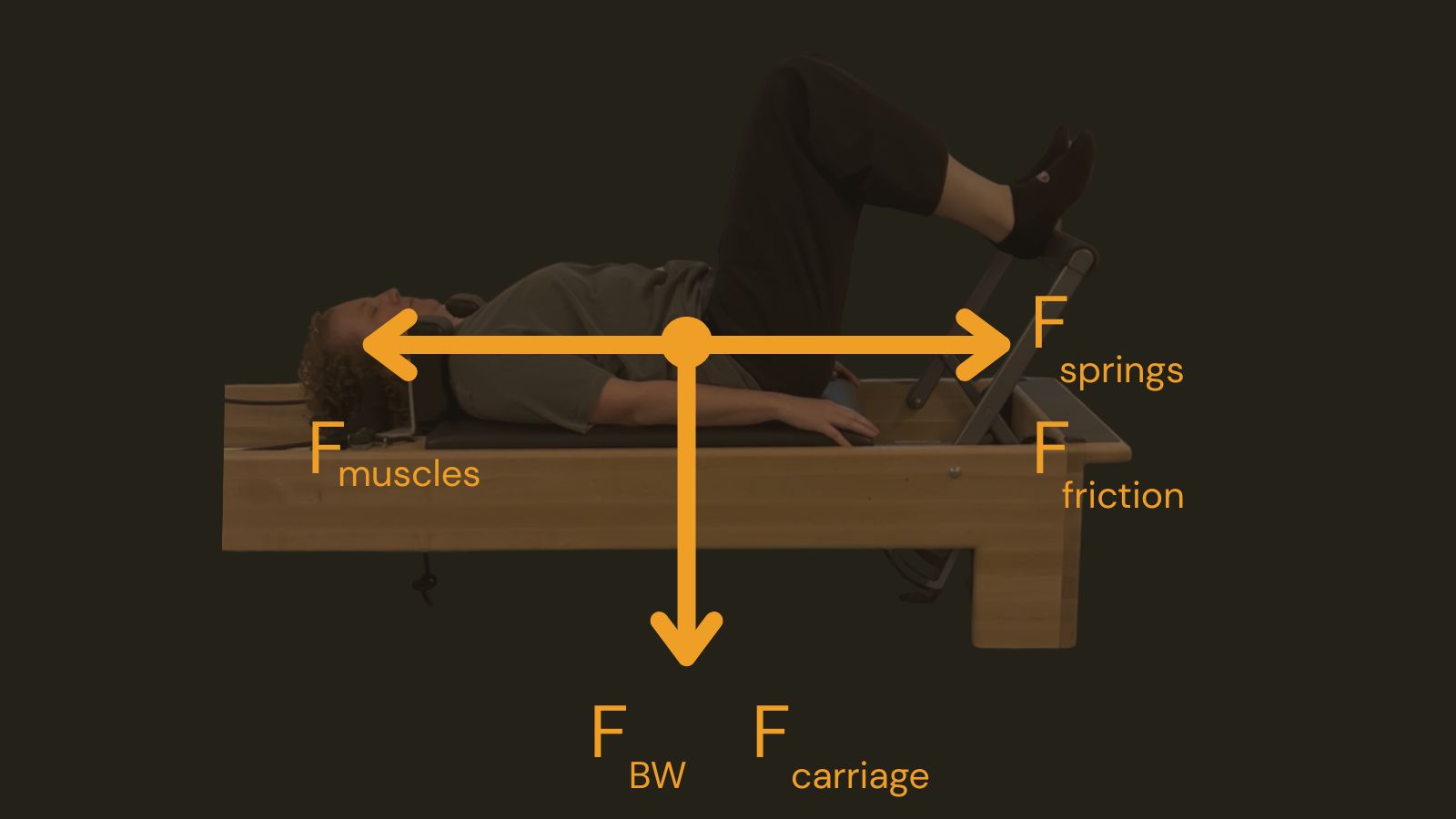
Before we can talk about friction, we need to talk about forces. A free body diagram is just a sketch that shows all the forces acting on an object. For a reformer carriage in footwork, there are three main horizontal forces at play:
- Spring force — pulling the carriage toward home (toward the footbar)
- Leg force — the force your client pushes through their feet to press the carriage out
- Friction force — always opposing the direction of motion
Then, there are two vertical forces at play:
- Body weight -downward force of the client on the carriage
- Carriage weight - downward force of the carriage on the reformer rails
When your client presses out, friction points inward (toward home). When the carriage returns, friction flips and points outward (away from home). It always resists the direction of travel. That's the defining rule of friction.
How friction is calculated on a reformer carriage
Rolling resistance on a reformer carriage comes from two places:
- Friction at the bearings or bushing — the interface between the axle and the wheel
- Rolling resistance at the wheel-rail contact — the slight deformation that happens where the wheel meets the aluminum track
The total friction force is the sum of both. And importantly, it scales with the weight pressing down on the carriage (meaning heavier clients generate more friction than lighter ones.) But just how much?
To calculate the force of friction at the bearings, multiply the coefficient of friction for the bearings by the normal force (body weight + carriage weight).
To calculate the force of friction at the wheel/rail interface, we use a slightly different equation to consider hysteresis, or the wheel coefficient times the normal force (body weight + carriage weight) divided by the wheel radius.
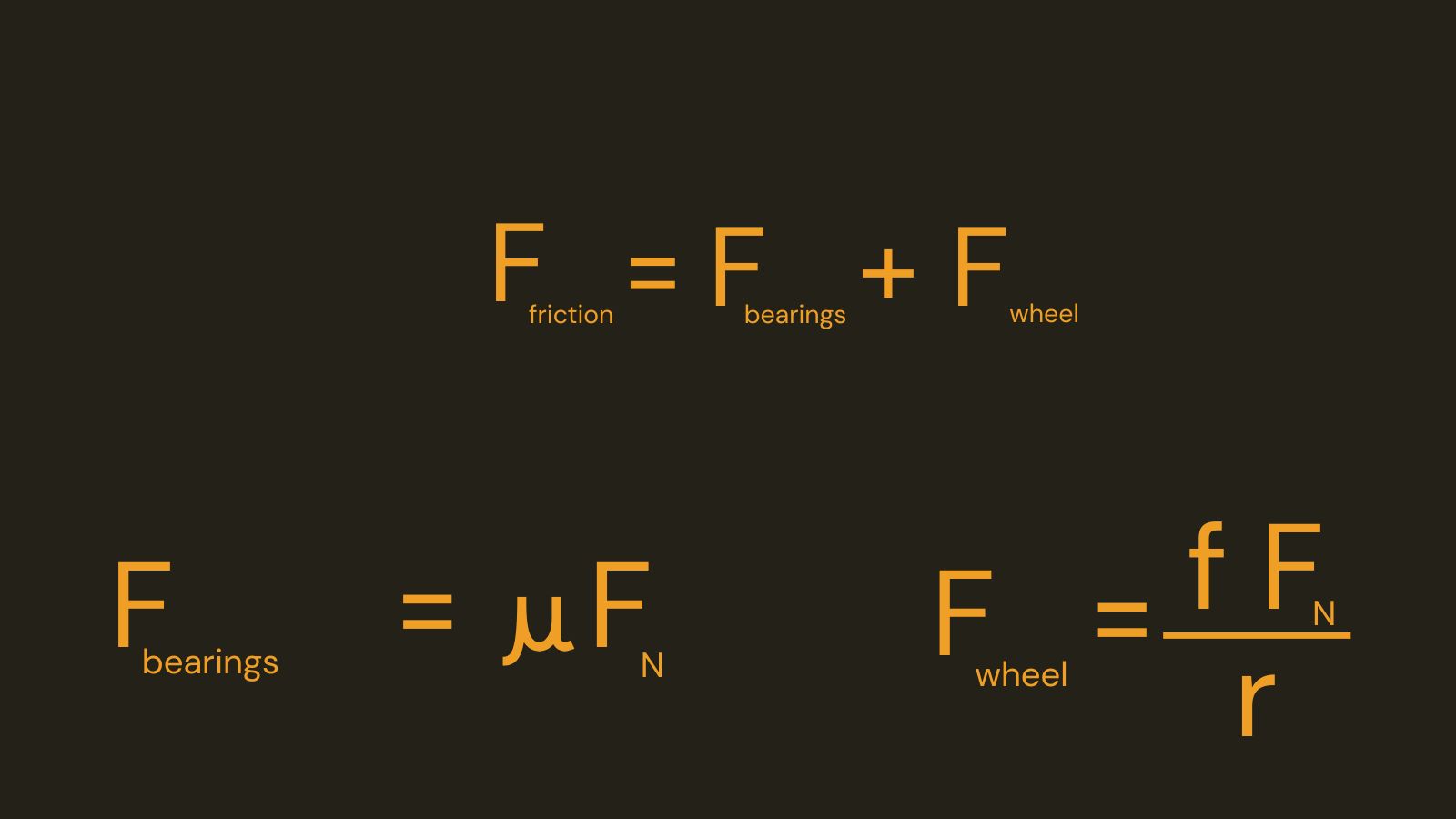
These formulas aren't something you need to memorize. Plugging in numbers once will help illustrate a concept.
For these examples I've pulled representative numbers based on standard ABEC rated bearings, material properties, and reported values from caster manufacturers. The actual values for your reformer setup are probably different.
Friction on a contemporary reformer with wheel bearings
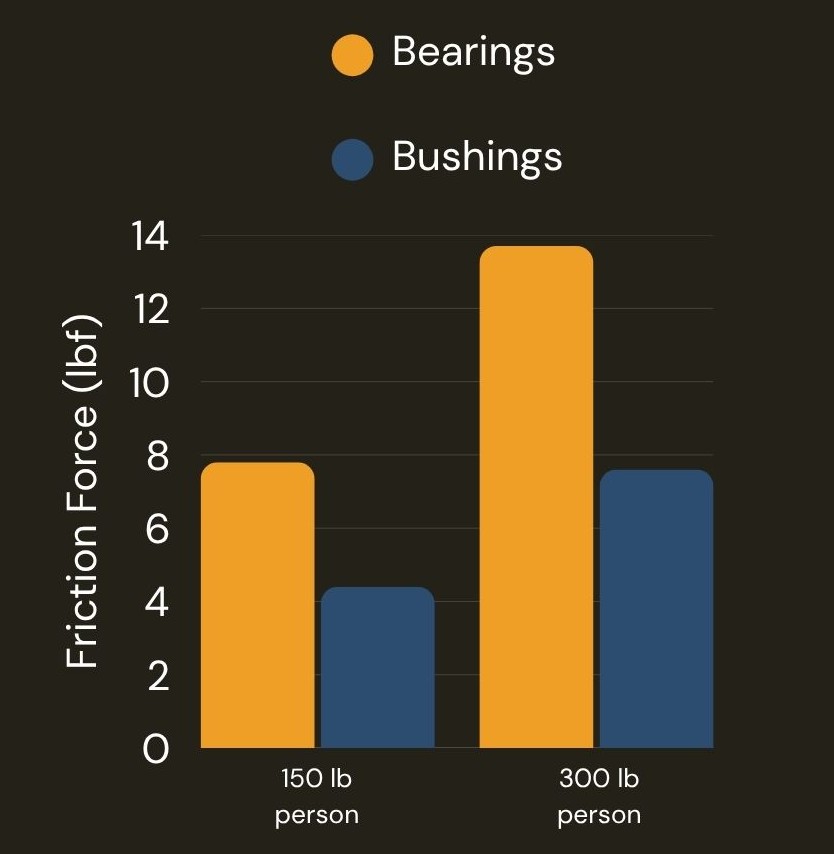
Let's use real numbers. On a contemporary reformer with wheel bearings (think Balanced Body Studio Reformer), a 150 lb person on a 50 lb carriage generates a rolling resistance of about 7.8 lbs.
A heavier client — say 300 lbs — on that same carriage generates about 13.7 lbs of friction.
The difference between those two clients? About 5.9 lbs.
Now here's the context check. In footwork on a standard spring setup, the spring force ranges from roughly 30 lbs to 110 lbs depending on your spring selection and how far the carriage travels. Against that range, a 6 lb difference between your lightest and heaviest clients is not a meaningful variable. I'd look at a client's height (which determines how far they stretch the spring) and their strength level long before I'd factor in rolling resistance when choosing spring settings.
Friction on a classical reformer with wheel bushings
Classical reformers use a different wheel design — slightly larger, made of a harder material, and they use a steel bushing instead of a bearing at the axle. Assume we're working with greased bushings (like classical manufacturers recommend.)
Run the same calculation to see the relative difference.
A 150 lb person on a classical carriage experiences about 4.4 lbs of rolling resistance. A 300 lb person generates about 7.6 lbs.
That's a difference of 3.2 lbs.
Why is it different? The classical wheel has a lower coefficient of friction at the wheel-rail contact and a higher coefficient at the bushing-axle interface than the contemporary example.
A few caveats worth noting:
- Exact values vary by manufacturer
- Poorly maintained equipment changes everything. Hair, dust, and dry bushings drive friction up significantly.
The one scenario where friction absolutely matters
Friction is constant throughout the exercises for the person on the reformer. If you're adjusting for major differences in spring stretch and assessing the individual client's strength, there's no reason to consider friction in your instructor calculus.
Here's the exception (and it's a real one you've probably felt in the studio.)
Take single-arm work with one light spring (like a yellow Balanced Body spring). The carriage might go out fine. Then it just... doesn't want to come back.
That's rolling resistance winning.
Look at the spring curve for a single light spring. On a Balanced Body light spring, the spring force doesn't even reach 7.8 lbs (the rolling resistance for a 150 lb person on a contemporary machine) until the spring is stretched about 12 inches. If you're working with the carriage close to home and the spring barely stretched, the spring simply doesn't have enough force to overcome friction and pull the carriage back in with a 150lb client.
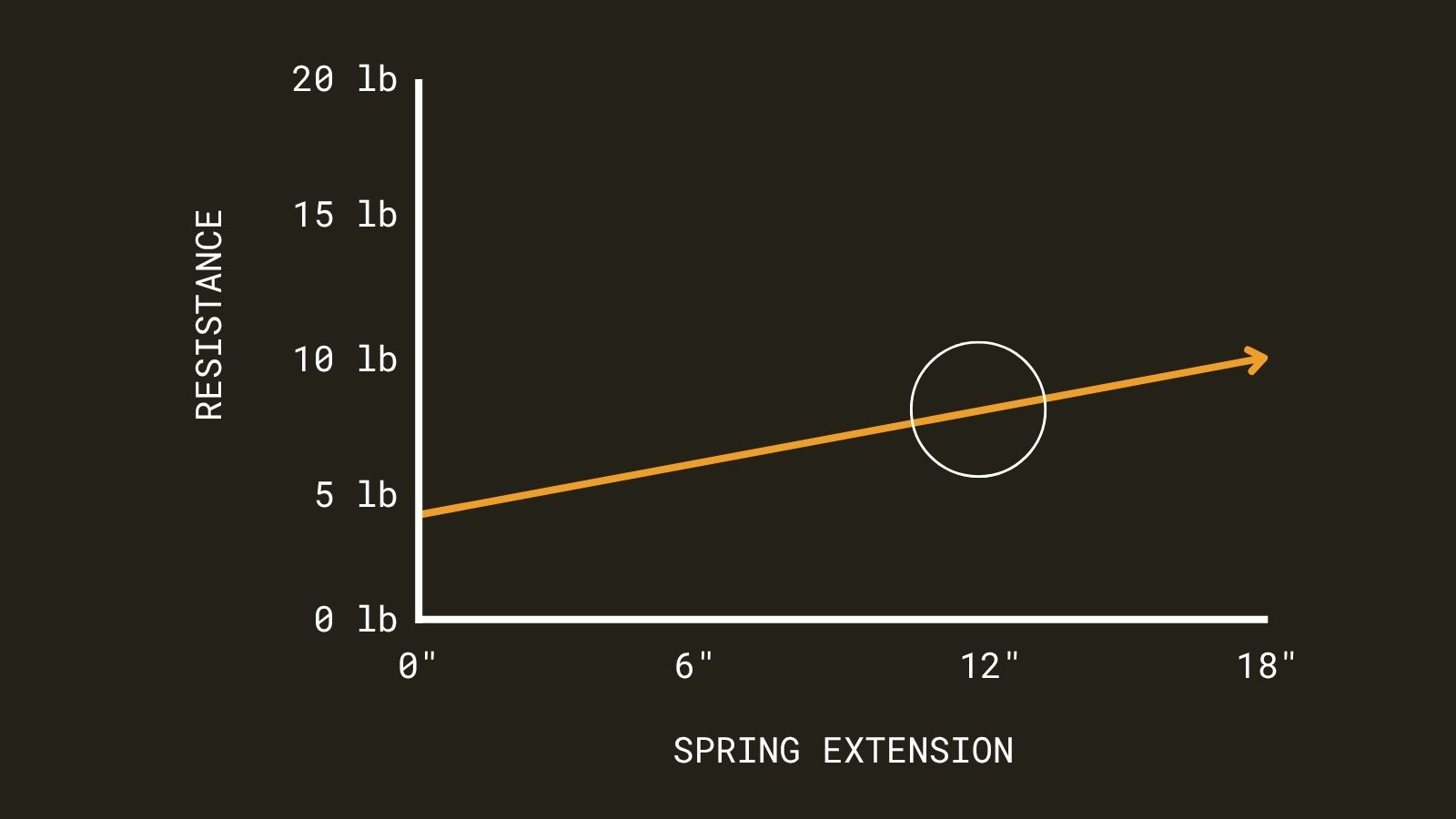
How do you solve this? Well if they can't tolerate a higher spring load (which will more easily overcome the rolling resistance on the return), you have to pick a different exercise.
So how should this change your teaching?
Mostly? It doesn't need to.
For the vast majority of exercises on a reformer, rolling resistance is a background variable. I will assess settings to match the client's body dimensions and strength first. I'm not going to start calculating friction coefficients before I choose spring settings. That would be overkill.
Here's what I will keep in mind:
- Very light spring work is where friction becomes a real factor. If the carriage is sluggish returning home, try a heavier spring or pick a different exercise.
- Equipment maintenance matters more than you think. Dirty wheels, rails, or dry bushings increase rolling resistance. This can make two reformers feel different for no apparent reason.
- Body weight creates a small but real difference in rolling resistance. It's not big enough to necessarily proactively drive spring selection, but it's good to know it exists.
The goal of understanding the physics isn't to make every teaching decision more complicated. It's to know when the physics is loud enough to actually affect what you do and when you can safely tune it out.